





eISSN: 1680-7324
Atmospheric Chemistry and Physics (ACP) is a not-for-profit international scientific journal publishing research with important implications for our understanding of the state and behaviour of the atmosphere and climate. Find details of the aims and scope.
ACP publishes research articles, short-format letters, reviews, opinions, and several other manuscript types.
Transparent peer review for 25 years: Atmospheric Chemistry and Physics has been a pioneer in transparent peer review. Submitted preprints, reviewer reports, all manuscript versions, and author replies are posted and permanently archived. This approach ensures the highest levels of scientific transparency and integrity, as well as fair peer review for authors. Read more about ACP's publishing model.
Journal metrics
ACP is indexed in the Web of Science, Scopus, Google Scholar, etc. We refrain from displaying the journal metrics prominently on the landing page since citation metrics used in isolation do not describe importance, impact, or quality of a journal. However, these metrics can be found on the journal metrics page.
News




Highlight articles
29 Sep 2026
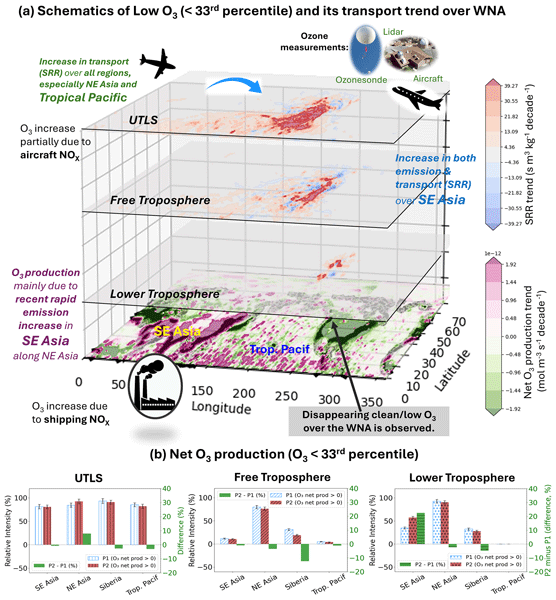
Origin of low ozone above western North America: an investigation of sources and trends
Atmos. Chem. Phys., 26, 13595–13615, 2026
08 Sep 2026
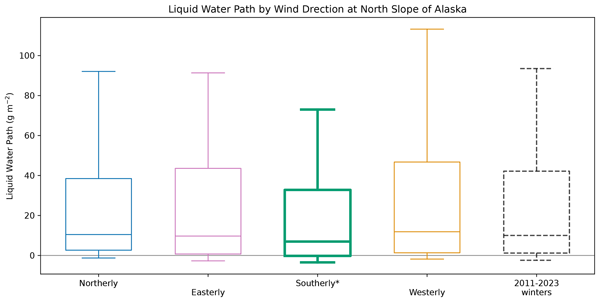
Cloud liquid water path at the North Slope of Alaska has minimal sensitivity to local meteorology in Arctic winter
Atmos. Chem. Phys., 26, 12689–12714, 2026
Recent papers
26 Oct 2026
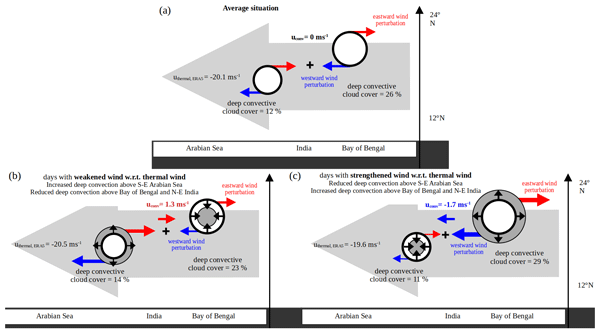
Relationships between deep convective clouds, cirrus clouds, and the tropical easterly jet over the Indian region observed with Aeolus spaceborne Doppler wind lidar
Atmos. Chem. Phys., 26, 15017–15036, 2026
26 Oct 2026
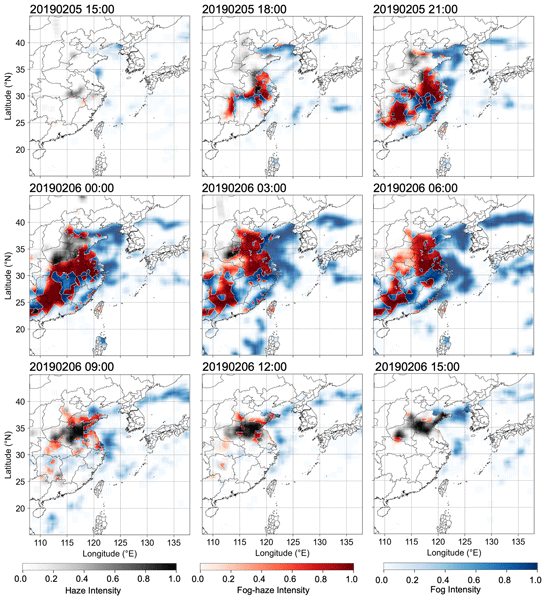
Classification and quantification of low-visibility events using deep learning over eastern China
Atmos. Chem. Phys., 26, 15003–15015, 2026
26 Oct 2026
Amazonian Biomass Burning Drives Regional Air Pollution and Premature Mortality in South America
EGUsphere, 2026
Preprint under review for ACP (discussion: open, 0 comments)
26 Oct 2026
Narrowing of Lagrangian Cold-Point Pathways into the Tropical Stratosphere
EGUsphere, 2026
Preprint under review for ACP (discussion: open, 0 comments)
26 Oct 2026
Secondary Organic Aerosol Formation in Coastal Air Modulated by Continental Outflow and High Humidity
EGUsphere, 2026
Preprint under review for ACP (discussion: open, 0 comments)
Scheduled special issues
TEAMx (Multi-scale transport and exchange processes in the atmosphere over mountains – programme and experiment)
(WCD/ACP/AMT/ESSD/GMD/TC inter-journal SI)
01 Jul 2026–30 Jun 2031 | ACP editors | Coordinators: Petr Šácha (Charles University, Czechia) and Annika Oertel (Karlsruhe Institute of Technology, Germany) | Co-organizers: Norman Wildmann (Deutsches Zentrum für Luft- und Raumfahrt e. V. (DLR), Germany) and Lorenzo Giovannini (University of Trento, Italy) |
Information
Achievements and perspectives of the Network for the Detection of Atmospheric Composition Change (NDACC) after 35 years of operation
(ACP/AMT inter-journal SI)
29 Jan 2026–31 Dec 2026 | ACP editors | Coordinators: Tuukka Petäjä (University of Helsinki, Finland) and Geraint Vaughan (University of Manchester, United Kingdom) | Co-organizers: Irina Petropavlovskikh (NOAA, United States of America), Martine De Mazière (Royal Belgian Institute for Space Aeronomy, Belgium), and Wolfgang Steinbrecht (DWD, Germany) |
Information
Aerosol, fog, climate, and biogeochemistry in southern Africa
(ACP/AMT/AR/ESSD inter-journal SI)
01 Jan 2026–31 Dec 2028 | ACP editors | Coordinators: Rebecca Garland (University of Pretoria, South Africa) and Marco Gaetani (Istituto Universitario di Studi Superiori di Pavia, Italy) | Co-organizers: Paola Formenti (Centre national de la recherche scientifique, France) and Hendrik Andersen (Karlsruhe Institute of Technology, Germany) |
Information
The tropopause region in a changing atmosphere (TPChange)
(ACP/AMT/GMD/WCD inter-journal SI)
01 Jul 2025–30 Jun 2027 | ACP editors | Coordinators: Peter Haynes (University of Cambridge, United Kingdom) and Simone Tilmes (NSF National Center for Atmospheric Research, United States) | Co-organizers: Peter Hoor (Johannes Gutenberg University Mainz, Germany) and Aurélien Podglajen (Laboratoire de Météorologie Dynamique, France) |
Information
Early results from EarthCARE
(AMT/ACP/GMD inter-journal SI)
04 Mar 2025–31 Dec 2028 | ACP editors | Coordinators: Timothy Garrett (University of Utah, United States) and Matthew Lebsock (Jet Propulsion Laboratory, United States) | Co-organizer: Robin Hogan (European Centre for Medium-Range Weather Forecasts, United Kingdom) |
Information
Notice on APC invoices
In accordance with current European restrictions, Copernicus Publications does not step into business relations with and issue APC invoices (articles processing charges) to Russian and Belarusian institutions. The peer-review process and scientific exchange of our journals including preprint posting is not affected. However, these restrictions require that the first contact (contractual partner of Copernicus) has an affiliation and invoice address outside Russia or Belarus.